The AI Data Center Boom Has an Energy Bill Coming Due
 By Darren Wolfberg, CEO ·
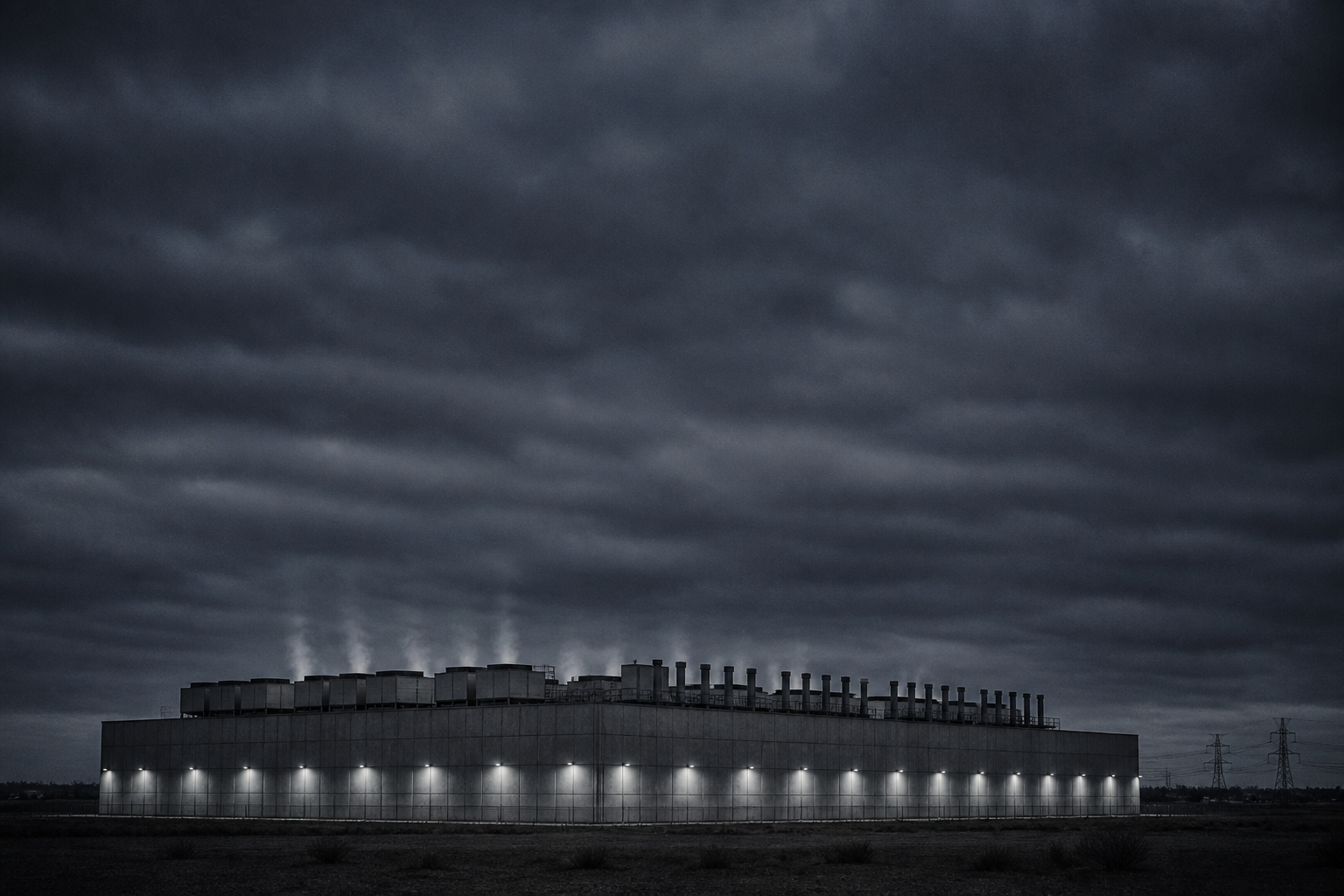
A single large AI data center can draw as much power as a mid-sized city. Developers are proposing dozens of them, often in clusters, on grids that were not built for the load. That is the situation now, not a projection for 2030. The question for anyone with exposure to this sector, whether through investment, procurement, or a zip code, is what happens when the bill for that power arrives and who ends up paying it.
The demand curve broke its own forecast
Grid operators build long-range demand forecasts and revise them slowly, because electricity demand in wealthy economies has been flat or falling for two decades thanks to efficiency gains. AI training and inference broke that pattern. Utilities in Virginia, Georgia, and several other US states have had to redo load forecasts mid-cycle because data center requests came in faster than planning cycles could absorb them. Northern Virginia alone hosts the largest concentration of data centers in the world, and its grid operator has flagged reliability concerns tied directly to that concentration.
The mismatch is not really about total power available. It is about timing. New generation capacity, especially anything beyond gas peaker plants, takes years to permit and build. A hyperscaler can sign a lease and start drawing power in a fraction of that time. The grid is being asked to serve load that arrives faster than supply can follow it.
Emissions accounting is quietly getting harder
Several of the largest AI operators have made public commitments to run on clean power, and some have signed real, sizable renewable contracts. But when a data center's demand spikes at 2am and the wind is not blowing, the marginal electron often comes from whatever is fastest to dispatch, which is frequently gas or, in some regions, coal. Some utilities have delayed retiring fossil plants specifically to cover data center load growth. That is a fact worth sitting with: the arrival of AI infrastructure has, in a handful of documented cases, extended the operating life of coal plants that were scheduled to close.
This creates a gap between the emissions a company reports against its clean energy contracts and the emissions the grid actually produces to serve it in real time. Annual accounting can smooth this over. Hourly accounting, which a small number of operators have started adopting, does not. The direction of travel among regulators and auditors is toward the hourly standard, not away from it. Anyone reporting Scope 2 numbers tied to a data center portfolio should expect that question to get sharper, not softer, over the next few reporting cycles.
The water and noise problems arrive before the emissions ones
Long before a community sees an emissions figure, it sees a water bill or hears a cooling system running around the clock. Data centers use water for cooling, and in drought-exposed regions like parts of the American Southwest, that has already become a point of local conflict. Noise from cooling infrastructure and backup generators has driven zoning disputes in several US counties, some of which have resulted in moratoriums on new data center permits. These are not hypothetical risks modeled years out. They are permitting delays and local ordinances happening now, and they move on a much faster timeline than an emissions dispute ever will.
This matters for underwriting and site selection in a very concrete way. A project that pencils out on power price and land cost can still stall for eighteen months over a local water permit or a zoning appeal. The risk is not just financial. It is timeline risk, and timeline risk on a capital-intensive build compounds quickly.
Who actually pays for the grid upgrade
Serving a new data center cluster usually requires new transmission lines, substation upgrades, or both. The cost of that infrastructure has to land somewhere, and in most US rate structures it lands, at least partly, on the same ratepayers who live near the facility but do not work there. Several state utility commissions are now actively debating whether hyperscalers should carry a larger share of interconnection costs directly, rather than having them socialized across the general rate base. Georgia's utility regulator has already moved in this direction for large new industrial loads.
This is the encroachment question underneath the encroachment question. It is not only about noise or water. It is about whether the community hosting the infrastructure sees its own electricity bill rise to subsidize a facility with a handful of local jobs and a global customer base. That tension is now showing up in local elections and public utility commission hearings, not just in advocacy reports.
What this means if you are pricing the risk
If you hold exposure to this sector, through direct investment, a supply agreement, or a facility in the pipeline, three things are worth checking now rather than at renewal. First, whether the power purchase agreement behind the facility is matched to actual hourly load or only to annual totals. Second, whether the interconnection and grid upgrade costs are allocated to the developer or socialized to the local rate base, because that allocation is increasingly a live regulatory question rather than a settled one. Third, whether local water and zoning approvals are secured or still pending, because that is the risk most likely to move your timeline in the next twelve months.
None of this argues against building the infrastructure. The compute is going to get built somewhere, and the grid, water, and community questions are engineering and governance problems, not reasons to stop. But they are problems with a cost, and right now that cost is being negotiated in real time between developers, utilities, and the communities hosting the buildings. Know which side of that negotiation your exposure sits on before the next facility comes up for approval.
Read more